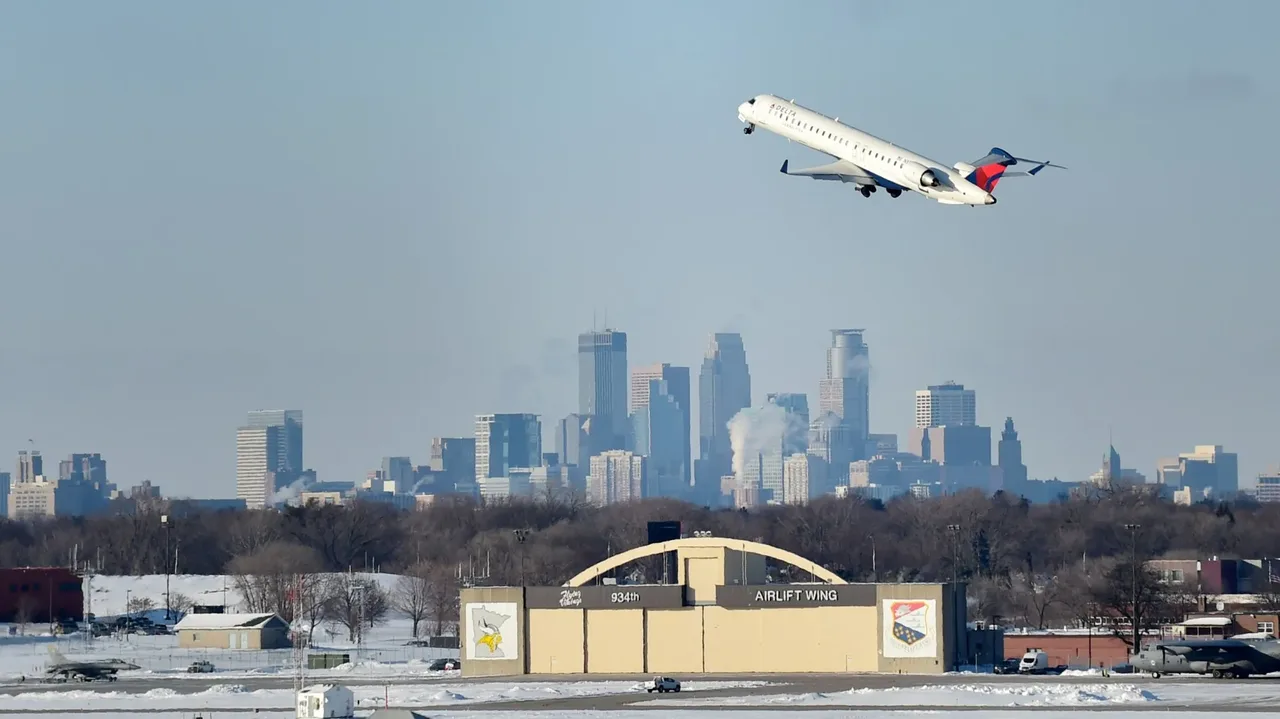
We call on the Metropolitan Airports Commission (MAC), the Noise Oversight Committee (NOC), and the Federal Aviation Administration (FAA )to immediately strengthen noise controls for departures on MSP runways 30L and 30R and to put the people living beneath and beside these flight paths ahead of convenience and volume.
Residents and homeowners in the neighborhoods under the north flow departure paths (Edina, Minneapolis, and Richfield) are already carrying a heavy burden. These runways are designated as the lowest priority because they send aircraft directly over densely populated residential communities, yet they still account for nearly half of all departing flights.
At the same time, the NOC has documented a significant year-over-year rise in noise complaints but has not released any actionable mitigation plan. That leaves hundreds of thousands of residents with little protection when traffic is busiest, and those peak periods can last for hours.
1. We ask for a public review of the thresholds that trigger use of 30L and 30R to identify practical strategies to decrease use - so they are used only when weather, wind, and genuine safety needs require it. They should not become the easy option during high-volume surges, spring break travel spikes, or regional event traffic.
2. We also ask for stronger protections during rest and sleep hours. The current voluntary limits (10:30pm to 6:00am for certain older aircraft) are not enough. Core quiet hours should be mandatory and expanded to 10:00pm to 7:00am, with strict shoulder-hour limits on the 30 corridor.
3. We further call for annual or seasonal caps on total departures using 30L and 30R, with a clear goal of reducing their current combined share of nearly half of all departures.
4. Finally, we ask the FAA, MAC, and airline operators to move quickly on steeper, quieter climb profiles, including modernized Area Navigation (RNAV) and reduced-thrust climb procedures that lift noise quickly away from neighborhoods. Despite being designated as a “mega” airport situated unusually close to densely populated residential areas, MSP fails to leverage the modern technology utilized by other major airports to achieve rapid altitude gains that reduce the impact on residents.
MSP, the MAC and the NOC have a duty to do better by using enforceable, accountability-based noise controls that protect nearby communities. Our health, quality of life, and enjoyment of our homes should not be compromised by unchecked economic growth for the benefit of MAC and the airlines.
3 Comments

Let's not let this get out of control before it's too late
Time to rein in the MAC and Delta
Sign Petition
We never post to your account. Social sign-in is used only to verify your signature.
Add a comment?
Your signature will be added via . Tell others why you're signing — it's optional.
By signing, you accept our Terms and Privacy Policy and agree to occasional emails about petitions. Unsubscribe anytime.
Share this petition
Share this petition to help it reach more people.
Your share link
We call on the Metropolitan Airports Commission (MAC), the Noise Oversight Committee (NOC), and the Federal Aviation Administration (FAA )to immediately strengthen noise controls for departures on MSP runways 30L and 30R and to put the people living beneath and beside these flight paths ahead of convenience and volume.
Residents and homeowners in the neighborhoods under the north flow departure paths (Edina, Minneapolis, and Richfield) are already carrying a heavy burden. These runways are designated as the lowest priority because they send aircraft directly over densely populated residential communities, yet they still account for nearly half of all departing flights.
At the same time, the NOC has documented a significant year-over-year rise in noise complaints but has not released any actionable mitigation plan. That leaves hundreds of thousands of residents with little protection when traffic is busiest, and those peak periods can last for hours.
1. We ask for a public review of the thresholds that trigger use of 30L and 30R to identify practical strategies to decrease use - so they are used only when weather, wind, and genuine safety needs require it. They should not become the easy option during high-volume surges, spring break travel spikes, or regional event traffic.
2. We also ask for stronger protections during rest and sleep hours. The current voluntary limits (10:30pm to 6:00am for certain older aircraft) are not enough. Core quiet hours should be mandatory and expanded to 10:00pm to 7:00am, with strict shoulder-hour limits on the 30 corridor.
3. We further call for annual or seasonal caps on total departures using 30L and 30R, with a clear goal of reducing their current combined share of nearly half of all departures.
4. Finally, we ask the FAA, MAC, and airline operators to move quickly on steeper, quieter climb profiles, including modernized Area Navigation (RNAV) and reduced-thrust climb procedures that lift noise quickly away from neighborhoods. Despite being designated as a “mega” airport situated unusually close to densely populated residential areas, MSP fails to leverage the modern technology utilized by other major airports to achieve rapid altitude gains that reduce the impact on residents.
MSP, the MAC and the NOC have a duty to do better by using enforceable, accountability-based noise controls that protect nearby communities. Our health, quality of life, and enjoyment of our homes should not be compromised by unchecked economic growth for the benefit of MAC and the airlines.
3 Comments
Steeper take off vectors
Let's not let this get out of control before it's too late
Time to rein in the MAC and Delta
Help this petition grow
Share it with friends to help reach 50 signatures.
Sign Petition
We never post to your account. Social sign-in is used only to verify your signature.
Add a comment?
Your signature will be added via .
Tell others why you're signing — it's optional.
Signing with Google or Facebook verifies your signature instantly — no email needed.
By signing, you accept our Terms and Privacy Policy and agree to occasional emails about petitions. Unsubscribe anytime.
Share this petition
Share this petition to help it reach more people.
Your share link
Petitions like this
Other petitions you might want to support




Scan to share
Anyone who scans this can sign the petition.
Steeper take off vectors