

We, the undersigned registered voters of the City of Seattle petition the Mayor of Seattle and the Seattle City Council to rescind approval of the three new proposed tent encampments announced on December 1, 2016 for at least six months to allow time for the following:
- the City to obtain an independent study of the impact of each encampment on the environment as well as surrounding neighborhoods and businesses;
- the City to obtain an independent cost analysis comparison of each proposed tent encampment versus rapid re-housing assistance over the same time period in locations within King County;
- the City to submit written rules and/or a proposed ordinance identifying the exact criteria for admission and continued residency at each proposed encampment and consequences for violations of rules;
- the City to agree to provide additional resources to neighborhoods housing authorized encampments for the purposes of assuring positive outcomes and providing transparency to neighborhoods;
- the surrounding residents and businesses to provide input and alternative proposals that meet the needs of the entire community;
- submission of the proposal to the qualified electors of the City of Seattle for approval or rejection at the next regular election or at a special election in accordance with Article V, Section 1 of the City Charter.
Homeless people belong indoors, either in homes, rehabilitation facilities, mental health facilities or other places where they can get the help they need. Housing First is the way to recovery and moving forward to independence. Tents without electricity, heat, showers, laundries or even nearby grocery stores are not the answer and are an inhumane plan for our vulnerable neighbors.
In early December, 2016 Mayor Murray signed an executive order creating three new city-sanctioned tent encampments which the Seattle City Council also approved without first holding any public hearings or soliciting input from the neighborhoods affected. The proposed encampments which are expected to only hold at most 210 people are located at:
- Georgetown – 1000 South Myrtle Street, an industrial area with no grocery stores, laundry services and poor bus service, which is expected to serve an estimated 60-70 people;
- West Seattle – 9701 Myers Way South, a city-owned greenbelt, which is expected to serve an estimated 60-70 people; and
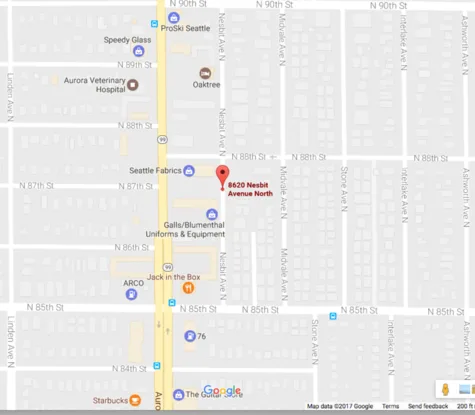
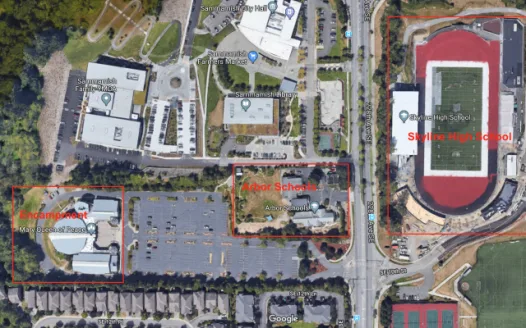
- North Seattle – 8620 Nesbit Avenue North, an undeveloped property near schools in a densely-inhabited, residential neighborhood, expected to serve an estimated 60-70 people including those with active substance addictions and “behavioral disorders” as the City’s first “low-barrier” encampment,
A. National Experts Have Recommended Against Allowing Tent Encampments since at Least 2012
Seattle Council member Tim Burgess told an audience at the Central Ballard Resident’s Association on November 10, 2016 that the City had been advised against allowing tent encampments for at least four years by the U.S. Interagency Council on Homeless (USICH), a commission appointed by President Obama, but this advice was ignored.
Last year, the City of Seattle hired Barbara Poppe, an expert formerly with USICH from 2009 to 2014, to assist it in developing a better plan to address homelessness using evidence-based national best practices. This was after a surge in homelessness in Seattle and King County during 2015 and 2016, while nationally, overall homelessness has been decreasing since 2011.
In February 2016, Ms. Poppe was interviewed and stated city officials should not be allowing tent cities. Ms. Poppe cited a number of cities who had enviable results and sharply decreased homelessness because of their commitment to Housing First.
On August 15, 2016, Ms. Poppe issued her written report and again recommended against tent encampments because they were expensive and not effective in moving individuals out of homelessness.
http://www.seattle.gov/Documents/Departments/pathwayshome/BPA.pdf
B. Tent Encampments Divert Funds and Other Resources from Evidence-Based Solutions
Ms. Poppe has stated,
“Encampments are a real distraction from investing in solutions. You can see it takes a lot of energy to get them running and they don’t solve the problem. You still have people who are visibly homeless, living outdoors.
...I find it horrifying you have children living in encampments and that is somehow acceptable to this community. It’s just unconscionable to me this is a choice that’s been made here.
...Housing First has been adopted by some organizations (in Seattle) but not across the board. In Salt Lake City, you only get funding if you do Housing First.”
Excluding all the time, effort and monetary resources used in identifying these three new sites, the City is proposing to spend $1.3 million in contracts to set up and operate these three tent cities for ten (10) months (March 1, 2017 through December 31, 2017).
Tent encampments only provide the most rudimentary of services (most have no heat, shower or laundry facilities) and some have no electricity or running water.
The City can and should do better.
C. The City Specifically Excluded Neighborhood Stakeholders from Discussion, Planning and Input until After the Fact
On February 7, 2017, the City’s Homelessness Director, George Scarola told members attending a meeting that neighborhood stakeholders were not included in the discussion around the three new tent encampments stating, “If we had sought input from the affected neighborhoods, we would never have gotten anything done.”
People who live or operate a business in a neighborhood are important stakeholders who should have had a seat at the table to discuss concerns from the beginning.
D. Transparency and Accountability is needed
With experts specifically calling out tent encampments for diverting funds and attention from long term solutions, neighborhood stakeholders have a right to transparency and accountability. The City appears to be “making it up” as it moves forward. That is not acceptable. City stakeholders have the right to have information and to be involved in the decision making process. Below are just some of the questions that remain unanswered:
- What is the environmental impact of the encampments, particularly the one on Myers Way, which is located on a city greenbelt?
- Why has the City now authorized six (6) new tent encampments when its experts state all tent cities should be eliminated?
- What data does the City have to show that the $1.3 million price tag to operate three new tent encampments (campsites for between 180 and 210 individuals) is cost-effective in the long term?
- What additional resources will the City provide to neighborhoods hosting tent encampments?
- How will the City prevent additional unauthorized encampments from springing up within one mile of each authorized encampment?
- How will the City provide transparency and accountability on the efficacy of each encampment in moving residents into employment and housing?
- What are the criteria for placement and retention of people into the “low-barrier” encampment? What are the rules and enforcement protocols? How will the City provide information to nearby residents?
- What evidence does the City have that its subcontractors are qualified to operate encampments?
Per the 100,000 homes manifesto,
“The time has come to stop managing homelessness and start ending it.
...The failure to collaborate meaningfully within and across communities is a …homeless industrial complex that must be dismantled one community at a time. Until local businesses, foundations, government agencies, landlords, outreach workers and service providers are seated at the same table with the same data, local systems will not improve and the same people will continue to languish on the streets.”
. . .
Housing First. Permanent housing that happens first and fast, so that no one must battle disease, disability, mental illness or substance abuse without the safety and security of a home.
Know Who’s Out There. Communities where every homeless person is known by name because someone has deliberately gone out on the streets to find them, assess their needs and meet them where they are at.
Track Your Progress. Local, multi-sector teams that use regularly collected, person-specific data to accurately track their progress toward ending homelessness for their most vulnerable neighbors.
Improve Local Systems. Housing and service systems that are simple and easy to navigate, while targeting resources quickly and efficiently to the people who need them most.
http://www.100khomes.org
Updates
February 24, 2017
The Mayor and City Council continue to ignore our demand for basic accountability while they push forward with these encampments. Their silence is a blatant insult to the taxpayers who actually live and work in these neighborhoods.
Reached 100 supporters
February 24, 2017
36 Comments
Once again the Mayor and city council seem intent on providing "solutions" with out the necessary thought required for the solution to become effective. Please take the time to make well informed decisions based on data, not "feel good" emotion.
We are concerned for our safety and decrease in home value in the surrounding areas.
This is an absurd amount of money for no long term relief. I feel I am overtaxed already, you want more and I don't believe you are looking out for anyone's interested but your own and or your friends!
The amount of money wasted on these temporary fixes is astronomical and wasteful. We need permanent transitional housing, medical care & treatment for mental illness and addiction.
Let's look to cities that are front-runners on this issue. Boston is tackling homelessness with placement services. Let's use decommissioned Navy ships, Magnusson barracks or other available space for short term temp housing. Let's not cater to the out of state transients, and please do not assess Seattle property owners to pay for this. It will drive up housing prices!!
Seattle needs to implement Housing First YESTERDAY!
No more homeless encampments please. You are throwing my money away and now you want more. NO
Sign Petition
We never post to your account. Social sign-in is used only to verify your signature.
Add a comment?
Your signature will be added via . Tell others why you're signing — it's optional.
By signing, you accept iPetitions Terms of Service and Privacy Policy.
Share Petition
Don't stop at signing, share the petition link with friends to multiply our impact
Copy link or share directly
We, the undersigned registered voters of the City of Seattle petition the Mayor of Seattle and the Seattle City Council to rescind approval of the three new proposed tent encampments announced on December 1, 2016 for at least six months to allow time for the following:
- the City to obtain an independent study of the impact of each encampment on the environment as well as surrounding neighborhoods and businesses;
- the City to obtain an independent cost analysis comparison of each proposed tent encampment versus rapid re-housing assistance over the same time period in locations within King County;
- the City to submit written rules and/or a proposed ordinance identifying the exact criteria for admission and continued residency at each proposed encampment and consequences for violations of rules;
- the City to agree to provide additional resources to neighborhoods housing authorized encampments for the purposes of assuring positive outcomes and providing transparency to neighborhoods;
- the surrounding residents and businesses to provide input and alternative proposals that meet the needs of the entire community;
- submission of the proposal to the qualified electors of the City of Seattle for approval or rejection at the next regular election or at a special election in accordance with Article V, Section 1 of the City Charter.
Homeless people belong indoors, either in homes, rehabilitation facilities, mental health facilities or other places where they can get the help they need. Housing First is the way to recovery and moving forward to independence. Tents without electricity, heat, showers, laundries or even nearby grocery stores are not the answer and are an inhumane plan for our vulnerable neighbors.
In early December, 2016 Mayor Murray signed an executive order creating three new city-sanctioned tent encampments which the Seattle City Council also approved without first holding any public hearings or soliciting input from the neighborhoods affected. The proposed encampments which are expected to only hold at most 210 people are located at:
- Georgetown – 1000 South Myrtle Street, an industrial area with no grocery stores, laundry services and poor bus service, which is expected to serve an estimated 60-70 people;
- West Seattle – 9701 Myers Way South, a city-owned greenbelt, which is expected to serve an estimated 60-70 people; and
- North Seattle – 8620 Nesbit Avenue North, an undeveloped property near schools in a densely-inhabited, residential neighborhood, expected to serve an estimated 60-70 people including those with active substance addictions and “behavioral disorders” as the City’s first “low-barrier” encampment,
A. National Experts Have Recommended Against Allowing Tent Encampments since at Least 2012
Seattle Council member Tim Burgess told an audience at the Central Ballard Resident’s Association on November 10, 2016 that the City had been advised against allowing tent encampments for at least four years by the U.S. Interagency Council on Homeless (USICH), a commission appointed by President Obama, but this advice was ignored.
Last year, the City of Seattle hired Barbara Poppe, an expert formerly with USICH from 2009 to 2014, to assist it in developing a better plan to address homelessness using evidence-based national best practices. This was after a surge in homelessness in Seattle and King County during 2015 and 2016, while nationally, overall homelessness has been decreasing since 2011.
In February 2016, Ms. Poppe was interviewed and stated city officials should not be allowing tent cities. Ms. Poppe cited a number of cities who had enviable results and sharply decreased homelessness because of their commitment to Housing First.
On August 15, 2016, Ms. Poppe issued her written report and again recommended against tent encampments because they were expensive and not effective in moving individuals out of homelessness.
http://www.seattle.gov/Documents/Departments/pathwayshome/BPA.pdf
B. Tent Encampments Divert Funds and Other Resources from Evidence-Based Solutions
Ms. Poppe has stated,
“Encampments are a real distraction from investing in solutions. You can see it takes a lot of energy to get them running and they don’t solve the problem. You still have people who are visibly homeless, living outdoors.
...I find it horrifying you have children living in encampments and that is somehow acceptable to this community. It’s just unconscionable to me this is a choice that’s been made here.
...Housing First has been adopted by some organizations (in Seattle) but not across the board. In Salt Lake City, you only get funding if you do Housing First.”
Excluding all the time, effort and monetary resources used in identifying these three new sites, the City is proposing to spend $1.3 million in contracts to set up and operate these three tent cities for ten (10) months (March 1, 2017 through December 31, 2017).
Tent encampments only provide the most rudimentary of services (most have no heat, shower or laundry facilities) and some have no electricity or running water.
The City can and should do better.
C. The City Specifically Excluded Neighborhood Stakeholders from Discussion, Planning and Input until After the Fact
On February 7, 2017, the City’s Homelessness Director, George Scarola told members attending a meeting that neighborhood stakeholders were not included in the discussion around the three new tent encampments stating, “If we had sought input from the affected neighborhoods, we would never have gotten anything done.”
People who live or operate a business in a neighborhood are important stakeholders who should have had a seat at the table to discuss concerns from the beginning.
D. Transparency and Accountability is needed
With experts specifically calling out tent encampments for diverting funds and attention from long term solutions, neighborhood stakeholders have a right to transparency and accountability. The City appears to be “making it up” as it moves forward. That is not acceptable. City stakeholders have the right to have information and to be involved in the decision making process. Below are just some of the questions that remain unanswered:
- What is the environmental impact of the encampments, particularly the one on Myers Way, which is located on a city greenbelt?
- Why has the City now authorized six (6) new tent encampments when its experts state all tent cities should be eliminated?
- What data does the City have to show that the $1.3 million price tag to operate three new tent encampments (campsites for between 180 and 210 individuals) is cost-effective in the long term?
- What additional resources will the City provide to neighborhoods hosting tent encampments?
- How will the City prevent additional unauthorized encampments from springing up within one mile of each authorized encampment?
- How will the City provide transparency and accountability on the efficacy of each encampment in moving residents into employment and housing?
- What are the criteria for placement and retention of people into the “low-barrier” encampment? What are the rules and enforcement protocols? How will the City provide information to nearby residents?
- What evidence does the City have that its subcontractors are qualified to operate encampments?
Per the 100,000 homes manifesto,
“The time has come to stop managing homelessness and start ending it.
...The failure to collaborate meaningfully within and across communities is a …homeless industrial complex that must be dismantled one community at a time. Until local businesses, foundations, government agencies, landlords, outreach workers and service providers are seated at the same table with the same data, local systems will not improve and the same people will continue to languish on the streets.”
. . .
Housing First. Permanent housing that happens first and fast, so that no one must battle disease, disability, mental illness or substance abuse without the safety and security of a home.
Know Who’s Out There. Communities where every homeless person is known by name because someone has deliberately gone out on the streets to find them, assess their needs and meet them where they are at.
Track Your Progress. Local, multi-sector teams that use regularly collected, person-specific data to accurately track their progress toward ending homelessness for their most vulnerable neighbors.
Improve Local Systems. Housing and service systems that are simple and easy to navigate, while targeting resources quickly and efficiently to the people who need them most.
http://www.100khomes.org
Updates
February 24, 2017
The Mayor and City Council continue to ignore our demand for basic accountability while they push forward with these encampments. Their silence is a blatant insult to the taxpayers who actually live and work in these neighborhoods.
Reached 100 supporters
February 24, 2017
36 Comments
Seattle Housing and Resource Effort, The City of Seattle homeless not for profit that runs the homeless camps for $880,000 a year does not file their 2015 and 2014 taxes correctly does not list their liabilties and assets and file their 1099 correctly and has kited checks. The City of Seattle does not care. Matthew Little
Once again the Mayor and city council seem intent on providing "solutions" with out the necessary thought required for the solution to become effective. Please take the time to make well informed decisions based on data, not "feel good" emotion.
We are concerned for our safety and decrease in home value in the surrounding areas.
This is an absurd amount of money for no long term relief. I feel I am overtaxed already, you want more and I don't believe you are looking out for anyone's interested but your own and or your friends!
The amount of money wasted on these temporary fixes is astronomical and wasteful. We need permanent transitional housing, medical care & treatment for mental illness and addiction.
Let's look to cities that are front-runners on this issue. Boston is tackling homelessness with placement services. Let's use decommissioned Navy ships, Magnusson barracks or other available space for short term temp housing. Let's not cater to the out of state transients, and please do not assess Seattle property owners to pay for this. It will drive up housing prices!!
Seattle needs to implement Housing First YESTERDAY!
No more homeless encampments please. You are throwing my money away and now you want more. NO
Help this petition grow
Share it with friends to help reach 250 signatures.
Sign Petition
We never post to your account. Social sign-in is used only to verify your signature.
Add a comment?
Your signature will be added via .
Tell others why you're signing — it's optional.
Signing with Google or Facebook verifies your signature instantly — no email needed.
By signing, you accept iPetitions Terms of Service and Privacy Policy.
Share Petition
Don't stop at signing, share the petition link with friends to multiply our impact
Petitions like this
Other petitions you might want to support




Scan to share
Anyone who scans this can sign the petition.
Seattle Housing and Resource Effort, The City of Seattle homeless not for profit that runs the homeless camps for $880,000 a year does not file their 2015 and 2014 taxes correctly does not list their liabilties and assets and file their 1099 correctly and has kited checks. The City of Seattle does not care. Matthew Little