
Why We Are Asking for a Review of the New Timetable
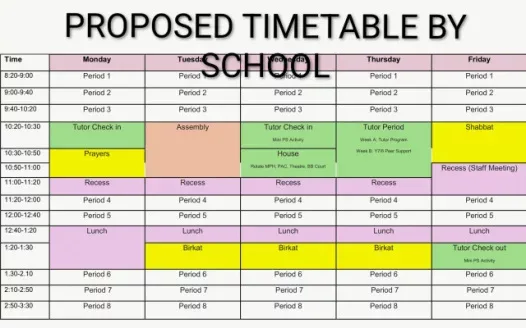
As 12th grade students, we are concerned about the impact of the new timetable, particularly the reduction from 80-minute lessons to 55-minute lessons and the simultaneous teaching of HL and SL students within the same periods.
Our concern is not simply that we prefer longer classes. It is whether shorter lessons are actually providing more effective instructional time. Transitions, setup and cleanup, interruptions, and managing separate HL and SL groups can take away valuable time that could otherwise be spent learning, practising, discussing, and receiving feedback.
This affects different subjects in different ways. Chemistry practicals require substantial time for preparation, experimentation, cleanup, and data analysis. Mathematics and Biology require enough uninterrupted time to cover extensive IB content while also practising exam questions and applying concepts. Art students need sustained work periods and opportunities for individual feedback from their teacher, while a highly constrained timetable can make both more difficult. English and Psychology also rely heavily on discussion and collaboration as part of the learning process. These are only specific examples, students across all subjects are experiencing challenges associated with shorter periods and divided instruction.
This is particularly concerning for 12th grade students because we are beginning our final year of the IB at a time when our academic performance has important consequences for our university applications. Grades from our first trimester contribute to the predicted grades that will be used in the university application process. Introducing significant changes to the way we learn during this period creates a risk that students' academic performance could be affected while we are being assessed under a system whose effectiveness has not yet been established.
We understand the reasoning behind the new timetable and the value of regular contact and continuity. However, we believe its effectiveness should be evaluated based on what is actually happening in classrooms. We are asking the school to consider student and teacher experiences and whether a modified structure, potentially including longer periods or more dedicated HL/SL teaching time, would better support learning.
Ultimately, our question is simple: Are we actually gaining effective and beneficial instructional time through more frequent, shorter lessons, or are we simply dividing the same learning into smaller pieces and losing valuable time every time we restart, transition, separate HL and SL work, or interrupt teaching?
16 Comments

I wish we had longer periods to have enough time to get work done. I would rather spend my time at home studying for an exam, not having to teach myself the topics we were supposed to learn in class.
The shorter periods make the classes feel rushed, and it’s super important especially for HL students to get extra time with more content. The short periods simply wouldn’t allow for that to happen.
I sincerely believe shorter classes are a detriment to our learning. Not only in practicality as it prevents in-depth learning, conflicts with English essay practices and Chem or Bio practical labs, among other issues. But also from a psychological perspective, as a sudden change in a once well established routine, in students last and most pivotal year of learning, will only work against students learning. Overall, the change is unwelcomed, and works against student learning in every way.
Esta petición la firmo por el bienestar académico de mi hijo y sus compañeros de clase. Estoy de acuerdo con la petición
Because I value my learning time
For me to have enough time to learn in each class
The schegule last year allowed us to change in between SL and HL days. Now the school has mixed it all up. We have shorter periods and are not able to work as before, it is making us overload. This big change will lead to the downfall of the students overall academic performance.
Sign Petition
We never post to your account. Social sign-in is used only to verify your signature.
Add a comment?
Your signature will be added via . Tell others why you're signing — it's optional.
By signing, you accept our Terms and Privacy Policy and agree to occasional emails about petitions. Unsubscribe anytime.
Share this petition
Share this petition to help it reach more people.
Your share link
Why We Are Asking for a Review of the New Timetable
As 12th grade students, we are concerned about the impact of the new timetable, particularly the reduction from 80-minute lessons to 55-minute lessons and the simultaneous teaching of HL and SL students within the same periods.
Our concern is not simply that we prefer longer classes. It is whether shorter lessons are actually providing more effective instructional time. Transitions, setup and cleanup, interruptions, and managing separate HL and SL groups can take away valuable time that could otherwise be spent learning, practising, discussing, and receiving feedback.
This affects different subjects in different ways. Chemistry practicals require substantial time for preparation, experimentation, cleanup, and data analysis. Mathematics and Biology require enough uninterrupted time to cover extensive IB content while also practising exam questions and applying concepts. Art students need sustained work periods and opportunities for individual feedback from their teacher, while a highly constrained timetable can make both more difficult. English and Psychology also rely heavily on discussion and collaboration as part of the learning process. These are only specific examples, students across all subjects are experiencing challenges associated with shorter periods and divided instruction.
This is particularly concerning for 12th grade students because we are beginning our final year of the IB at a time when our academic performance has important consequences for our university applications. Grades from our first trimester contribute to the predicted grades that will be used in the university application process. Introducing significant changes to the way we learn during this period creates a risk that students' academic performance could be affected while we are being assessed under a system whose effectiveness has not yet been established.
We understand the reasoning behind the new timetable and the value of regular contact and continuity. However, we believe its effectiveness should be evaluated based on what is actually happening in classrooms. We are asking the school to consider student and teacher experiences and whether a modified structure, potentially including longer periods or more dedicated HL/SL teaching time, would better support learning.
Ultimately, our question is simple: Are we actually gaining effective and beneficial instructional time through more frequent, shorter lessons, or are we simply dividing the same learning into smaller pieces and losing valuable time every time we restart, transition, separate HL and SL work, or interrupt teaching?
16 Comments
I don’t think this new timetable is going to work for us because how are we supposed to learn when sl and hl are mixed up and in some clases hl haven’t even started learning new content. This change is too disruptive.
I wish we had longer periods to have enough time to get work done. I would rather spend my time at home studying for an exam, not having to teach myself the topics we were supposed to learn in class.
The shorter periods make the classes feel rushed, and it’s super important especially for HL students to get extra time with more content. The short periods simply wouldn’t allow for that to happen.
I sincerely believe shorter classes are a detriment to our learning. Not only in practicality as it prevents in-depth learning, conflicts with English essay practices and Chem or Bio practical labs, among other issues. But also from a psychological perspective, as a sudden change in a once well established routine, in students last and most pivotal year of learning, will only work against students learning. Overall, the change is unwelcomed, and works against student learning in every way.
Esta petición la firmo por el bienestar académico de mi hijo y sus compañeros de clase. Estoy de acuerdo con la petición
Because I value my learning time
For me to have enough time to learn in each class
The schegule last year allowed us to change in between SL and HL days. Now the school has mixed it all up. We have shorter periods and are not able to work as before, it is making us overload. This big change will lead to the downfall of the students overall academic performance.
Help this petition grow
Share it with friends to help reach 100 signatures.
Sign Petition
We never post to your account. Social sign-in is used only to verify your signature.
Add a comment?
Your signature will be added via .
Tell others why you're signing — it's optional.
Signing with Google or Facebook verifies your signature instantly — no email needed.
By signing, you accept our Terms and Privacy Policy and agree to occasional emails about petitions. Unsubscribe anytime.
Share this petition
Share this petition to help it reach more people.
Your share link
Petitions like this
Other petitions you might want to support





Scan to share
Anyone who scans this can sign the petition.
I don’t think this new timetable is going to work for us because how are we supposed to learn when sl and hl are mixed up and in some clases hl haven’t even started learning new content. This change is too disruptive.