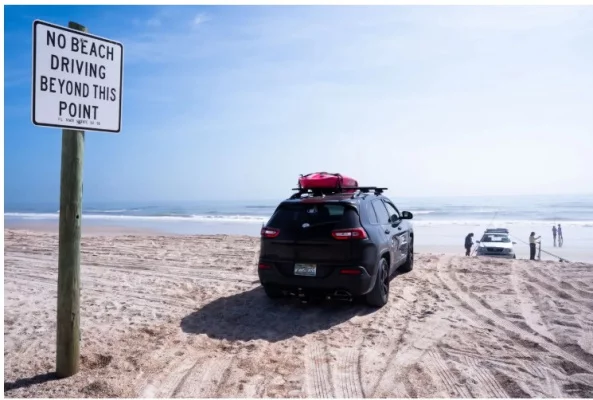
Stop Beach Driving on Amelia Island

 Maxine K. signed
just now
Adam B. signed
just now
Maxine K. signed
just now
Adam B. signed
just now
Driving on a barrier island is not just another form of recreation. It has permanent consequences. Barrier islands are living, shifting systems—the first line of defense against hurricanes and storms. When vehicles compact the sand, dunes weaken, leaving both wildlife and homes more vulnerable. Tire tracks carve up nesting sites for endangered sea turtles and shorebirds. Hatchlings, already facing steep odds of survival, often die trapped in deep ruts. These are not inconveniences; they are irreversible harms.
Ending beach driving does not mean ending beach access. Public lots and walkovers exist and can be expanded. Everyone still has the right to enjoy the sand, surf, and sunsets. The difference is whether we choose to enjoy them responsibly, without turning fragile shoreline into a roadway.
This issue is not “locals versus outsiders.” It is not about politics, wealth, or property lines. The question is simpler: Do we want to leave a healthy beach for future generations, or sacrifice it for the temporary thrill of driving across the sand? Once damaged, a barrier island cannot easily be restored.
The true joy of the beach—watching children run free, seeing a turtle nest hatch, feeling the dunes shift with the wind—does not come from behind the wheel of a truck. It comes from preserving a natural treasure that belongs to everyone.
Protecting our beaches is not exclusion. It is common sense. A barrier island is too fragile to serve as a highway. Ending beach driving is not punishment—it is a promise to the future.
 Share on Facebook
Comment
See More 0