
HOW CAN A SCHOOL GARDEN BENEFIT OUR SCHOOLS?
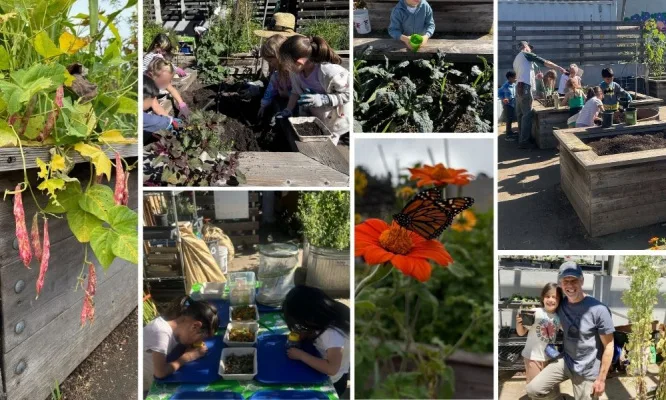
In short, because it’s an incredibly easy endeavor with countless benefits and few cons (if any). Research and peer reviewed studies over the past 10 years have confirmed what common sense should have told us: getting children and teens outside, in the fresh air, reconnecting them to the land, empowering them by putting responsibility on their shoulders, and teaching in and with the garden, is an incredibly effective way to solve many of the issues we see within our district and our homes.
- Students who have school garden programs incorporated into their science curriculum have been shown to score significantly higher on science achievement tests than students who are taught through traditional classroom methods. Most recent data from DESE shows that of our districts sixth graders, 44.2% of students perform in the Basic science category and 11.6% perform in the Below Basic category. Fifth graders scores are even more concerning. Integrating a simple garden into these students’ curriculum has been scientifically proven to raise scores.
- A school garden could, simply put, do just for our district what it has done for other forward-thinking districts in the country. For example, schools in Texas, D.C., Maryland, and Virginia, have instituted “learning gardens” for use in math lessons and science curriculum and as such, have seen a 12 to 15% increase in the number of students passing standardized tests. Even better, 94% of the teachers involved in these programs report seeing increased engagement and attention from their students.
- In 2014, 34.46% of our district’s funding was local. Adding school gardens to our district could grow this percentage as a study by the Center for Ecoliteracy notes that school bond and parcel tax measures have higher passage rates if they include a nutritional / garden aspect.
- Nearly 20% of the students in our elementary school face food insecurity, meaning that a large majority of their daily calories come from the food they’re given in school. Teaching low-income children how to garden and working to grow their enthusiasm for it has been shown to increase gardens and healthy eating outside of school. This could have far reaching effects on student’s performance – better nourished children are better students.
- Research shows that time spent outdoors by youth is central to the development of creativity and social and emotional skill, things that are much harder to teach in the classroom with worksheets and traditional curriculum.
- In a district with so many students participating in FFA, 4H, and other ag programs, school gardens and greenhouses are a unique opportunity for us to support agricultural entrepreneurship and encourage new ways of learning through agriscience and emerging agricultural techniques which could help to increase the percentage of our district’s students that attend a 4 year college/university. (In 2015, only 19% of Richland’s students enrolled in a 4 year university. By contrast, the overall state percentage was 36.9.)
- Engaging students in outdoor and fresh air activities has been consistently shown to reduce disciplinary incidents, classroom disruptions, and even poor attention spans and behavior. Solid scientific research shows that time spent in nature reduces anxiety among children. A study done in Illinois showed that even just an extra 20 minutes outside led to a substantial attention boost. And researchers in Barcelona found that school children with more outdoor exposure during school hours performed better on cognitive testing.
- A school garden initiative within our district would open us up to more funding through the USDA and other agencies.
In 2016, Missouri will pass the Farm to School Act, requiring all public schools and institutions purchase at least 5% of their food locally. Instituting school gardens into our district and curriculum now puts us ahead of that mandate; by the end of next year, our district could be supplying itself with local foods grown right here on school grounds by our own students, saving the district money and boosting test scores all at once. Another benefit of getting ahead of this mandate will be a reduction in food waste when healthier fruits and vegetables are eventually added to school meals; the most effective way to combat food waste in schools is to actively engage the students in growing their own food and to repeatedly expose them to foods with which they are unfamiliar.
On October 19, 2015, this presentation was put before the School Board of the Richland School District, after a meeting with Superintendent Tony Hermann. As of yet, no decision seems to have been made -- by showing your support for a learning garden at our elementary and high school, perhaps we can spur those in charge to take action.
Updates
November 18, 2015
been spending the last few days meeting with some people interested in helping get these gardens off the ground. its wild how much people care about this when we actually start talking about the science scores and how kids learn best outside. ill keep you posted once i get a clearer sense of what the next steps look like.
November 18, 2015
wow i am honestly blown away by the energy behind this idea lately. it feels like the community is finally ready to get our hands dirty and make these gardens happen.
15 Comments
Learning to garden wiil teach children different good habits. Patience, persistence, reaping what they sew...good smells or tastes....observing what comes from one seed...miracles really.
My daughter was fortunate enough to go to a Catholic school in STL, where the girls grew food that was prepared for lunch, and shared. Amazing experience for the children, and a skill that they can carry with them forever.
Good idea for the kids. Osage Beach has a Monarch butterfly garden.
This sounds like a great idea!
This is a great opportunity! I wish it would have been available when I went to school. I took Horticulture when I was there. My teacher was Mr. Bob. Always a blast and I enjoyed it. Hope this happens for the students attending now!
Take a look at Southern Boone County School District (Ashland) program on the Misouri School Boards' Association webpage here on facebook!
Please do this. It will be so good for them to have these skills.
Sign Petition
We never post to your account. Social sign-in is used only to verify your signature.
Add a comment?
Your signature will be added via . Tell others why you're signing — it's optional.
By signing, you accept our Terms and Privacy Policy and agree to occasional emails about petitions. Unsubscribe anytime.
Share this petition
Share this petition to help it reach more people.
Your share link
HOW CAN A SCHOOL GARDEN BENEFIT OUR SCHOOLS?
In short, because it’s an incredibly easy endeavor with countless benefits and few cons (if any). Research and peer reviewed studies over the past 10 years have confirmed what common sense should have told us: getting children and teens outside, in the fresh air, reconnecting them to the land, empowering them by putting responsibility on their shoulders, and teaching in and with the garden, is an incredibly effective way to solve many of the issues we see within our district and our homes.
- Students who have school garden programs incorporated into their science curriculum have been shown to score significantly higher on science achievement tests than students who are taught through traditional classroom methods. Most recent data from DESE shows that of our districts sixth graders, 44.2% of students perform in the Basic science category and 11.6% perform in the Below Basic category. Fifth graders scores are even more concerning. Integrating a simple garden into these students’ curriculum has been scientifically proven to raise scores.
- A school garden could, simply put, do just for our district what it has done for other forward-thinking districts in the country. For example, schools in Texas, D.C., Maryland, and Virginia, have instituted “learning gardens” for use in math lessons and science curriculum and as such, have seen a 12 to 15% increase in the number of students passing standardized tests. Even better, 94% of the teachers involved in these programs report seeing increased engagement and attention from their students.
- In 2014, 34.46% of our district’s funding was local. Adding school gardens to our district could grow this percentage as a study by the Center for Ecoliteracy notes that school bond and parcel tax measures have higher passage rates if they include a nutritional / garden aspect.
- Nearly 20% of the students in our elementary school face food insecurity, meaning that a large majority of their daily calories come from the food they’re given in school. Teaching low-income children how to garden and working to grow their enthusiasm for it has been shown to increase gardens and healthy eating outside of school. This could have far reaching effects on student’s performance – better nourished children are better students.
- Research shows that time spent outdoors by youth is central to the development of creativity and social and emotional skill, things that are much harder to teach in the classroom with worksheets and traditional curriculum.
- In a district with so many students participating in FFA, 4H, and other ag programs, school gardens and greenhouses are a unique opportunity for us to support agricultural entrepreneurship and encourage new ways of learning through agriscience and emerging agricultural techniques which could help to increase the percentage of our district’s students that attend a 4 year college/university. (In 2015, only 19% of Richland’s students enrolled in a 4 year university. By contrast, the overall state percentage was 36.9.)
- Engaging students in outdoor and fresh air activities has been consistently shown to reduce disciplinary incidents, classroom disruptions, and even poor attention spans and behavior. Solid scientific research shows that time spent in nature reduces anxiety among children. A study done in Illinois showed that even just an extra 20 minutes outside led to a substantial attention boost. And researchers in Barcelona found that school children with more outdoor exposure during school hours performed better on cognitive testing.
- A school garden initiative within our district would open us up to more funding through the USDA and other agencies.
In 2016, Missouri will pass the Farm to School Act, requiring all public schools and institutions purchase at least 5% of their food locally. Instituting school gardens into our district and curriculum now puts us ahead of that mandate; by the end of next year, our district could be supplying itself with local foods grown right here on school grounds by our own students, saving the district money and boosting test scores all at once. Another benefit of getting ahead of this mandate will be a reduction in food waste when healthier fruits and vegetables are eventually added to school meals; the most effective way to combat food waste in schools is to actively engage the students in growing their own food and to repeatedly expose them to foods with which they are unfamiliar.
On October 19, 2015, this presentation was put before the School Board of the Richland School District, after a meeting with Superintendent Tony Hermann. As of yet, no decision seems to have been made -- by showing your support for a learning garden at our elementary and high school, perhaps we can spur those in charge to take action.
Updates
November 18, 2015
been spending the last few days meeting with some people interested in helping get these gardens off the ground. its wild how much people care about this when we actually start talking about the science scores and how kids learn best outside. ill keep you posted once i get a clearer sense of what the next steps look like.
November 18, 2015
wow i am honestly blown away by the energy behind this idea lately. it feels like the community is finally ready to get our hands dirty and make these gardens happen.
15 Comments
Not every child has a grandmother to teach them how to grow their own food and care for the earth. It's an important thing to incorporate into our learning system.
Learning to garden wiil teach children different good habits. Patience, persistence, reaping what they sew...good smells or tastes....observing what comes from one seed...miracles really.
My daughter was fortunate enough to go to a Catholic school in STL, where the girls grew food that was prepared for lunch, and shared. Amazing experience for the children, and a skill that they can carry with them forever.
Good idea for the kids. Osage Beach has a Monarch butterfly garden.
This sounds like a great idea!
This is a great opportunity! I wish it would have been available when I went to school. I took Horticulture when I was there. My teacher was Mr. Bob. Always a blast and I enjoyed it. Hope this happens for the students attending now!
Take a look at Southern Boone County School District (Ashland) program on the Misouri School Boards' Association webpage here on facebook!
Please do this. It will be so good for them to have these skills.
Help this petition grow
Share it with friends to help reach 50 signatures.
Sign Petition
We never post to your account. Social sign-in is used only to verify your signature.
Add a comment?
Your signature will be added via .
Tell others why you're signing — it's optional.
Signing with Google or Facebook verifies your signature instantly — no email needed.
By signing, you accept our Terms and Privacy Policy and agree to occasional emails about petitions. Unsubscribe anytime.
Share this petition
Share this petition to help it reach more people.
Your share link
Petitions like this
Other petitions you might want to support





Scan to share
Anyone who scans this can sign the petition.
Not every child has a grandmother to teach them how to grow their own food and care for the earth. It's an important thing to incorporate into our learning system.