THEY FINALLY LISTENED AND THE U19 SCRUM RULES ARE GONE!! WE TURNED THE TIDE AND FULL SCRUM LAWS ARE BACK IN THE NATIONAL LEAGUE A!! THANK YOU FOR FIGHTING FOR THE REAL GAME ALONGSIDE ME!!
June 10, 2019

Final supporters
To support the growth and development of rugby in Switzerland in a balanced way, all teams in the National League A (both men and women alike) must compete under the full scrums laws as defined by World Rugby. However, following the 2017-2018 season, the top women’s league is now limited to competing under the U19 scrum laws. This is to the detriment of the growth of women’s rugby, devaluing the game both for players and spectators.
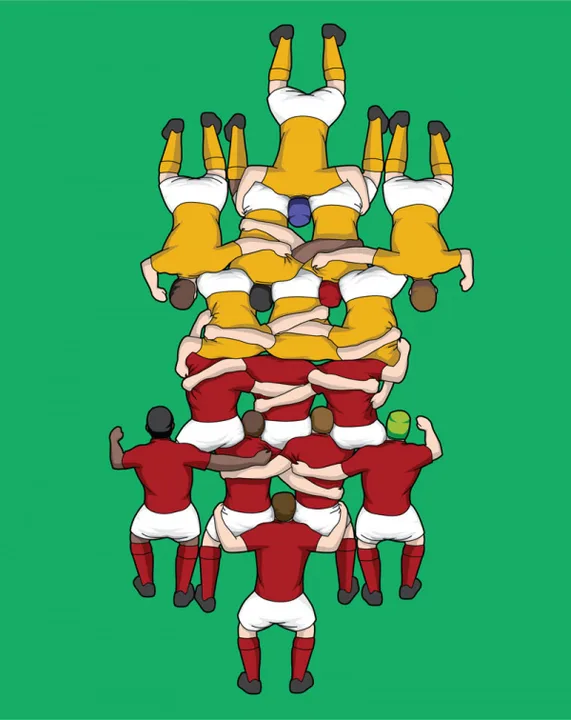
The scrum, when refereed competently and carried out by well-coached players, is an essential part of adult rugby: the team that dominates the scrum can dominate the game. Beyond a restart of play it provides a dynamic attacking platform and, under the full laws, it allows a strong defensive side a genuine opportunity to battle for possession and territory. It also serves as a psychological weapon: a dominant scrum energises the entire forward pack, and can force teams to adapt their tactics in-game. The scrum is historically the part of the game that calls for something different in the type of players needed: a glance at Rugby League demonstrates that without the scrum, all players start to look very similar in terms of physique and this reduces the potential pool of players available, limits the degree of variety within gameplay and leads to a dull, repetitious style.
To remove competitive scrummaging is to remove the core of rugby itself. Imposing the U19 scrum rules is a step backward for the top women’s rugby league and should be reversed immediately, before the damaging effects of such a decision can be felt. This is critical to ensure that Swiss rugby can remain competitive at an international level, against opponents who all scrummage under full adult rules in their respective domestic leagues.
If you agree with us, please show your support by signing below; in the comments section make sure to indicate if you’re a player or coach and from which club you belong.
Updates
Reached 100 supporters
April 27, 2019
48 Comments
What Women's teams in League A do not have a coach? Is there tangible evidence that illustrates a history of scrum-induced injuries in the Women's A league? Please note that this petition is focused solely on the Swiss League A teams. To my knowledge, all Women's League A teams have a coach, and I am not aware of evidence to support the safety claim in the Women's A League.
Forcing the U19 scrum rules on the women's teams is very condescending to the players and not what we want to see as spectators
Cern Wildcats, Hooker - To resist the power of 5 players behind the front row is extremely hard (i know from having to do it) and this far more unsafe to stop at 1.5metres than being able to push straight. If we want to grow the sport, it must include adult rules.
The U19 rules are actually more unsafe for the pack and prevent the scrum from developing and progressing.
In my opinion the under 19 rules are more dangerous for a scrum than the normal rules. Having to stop pushing during a scrum seems more Disturbing than to continue the push with straight backs and legs in proper position.
Dangels luzern
former player, dangels luzern
Share this petition
Share this petition to help it reach more people.
Your share link
THEY FINALLY LISTENED AND THE U19 SCRUM RULES ARE GONE!! WE TURNED THE TIDE AND FULL SCRUM LAWS ARE BACK IN THE NATIONAL LEAGUE A!! THANK YOU FOR FIGHTING FOR THE REAL GAME ALONGSIDE ME!!
June 10, 2019
Final supporters
To support the growth and development of rugby in Switzerland in a balanced way, all teams in the National League A (both men and women alike) must compete under the full scrums laws as defined by World Rugby. However, following the 2017-2018 season, the top women’s league is now limited to competing under the U19 scrum laws. This is to the detriment of the growth of women’s rugby, devaluing the game both for players and spectators.
The scrum, when refereed competently and carried out by well-coached players, is an essential part of adult rugby: the team that dominates the scrum can dominate the game. Beyond a restart of play it provides a dynamic attacking platform and, under the full laws, it allows a strong defensive side a genuine opportunity to battle for possession and territory. It also serves as a psychological weapon: a dominant scrum energises the entire forward pack, and can force teams to adapt their tactics in-game. The scrum is historically the part of the game that calls for something different in the type of players needed: a glance at Rugby League demonstrates that without the scrum, all players start to look very similar in terms of physique and this reduces the potential pool of players available, limits the degree of variety within gameplay and leads to a dull, repetitious style.
To remove competitive scrummaging is to remove the core of rugby itself. Imposing the U19 scrum rules is a step backward for the top women’s rugby league and should be reversed immediately, before the damaging effects of such a decision can be felt. This is critical to ensure that Swiss rugby can remain competitive at an international level, against opponents who all scrummage under full adult rules in their respective domestic leagues.
If you agree with us, please show your support by signing below; in the comments section make sure to indicate if you’re a player or coach and from which club you belong.
Updates
Reached 100 supporters
April 27, 2019
48 Comments
Being a front row player for 20 years, how many neck injuries have i seen in all the countries that i have played in female leagues which include New Zealand, UK and Switzerland. I happy to report its only 1. 1 in 200-220 matches , I think this is a low average. If the FSR wish to bring in safety it should compare a number of countries beyond France , perhaps look at other strong unions such as England, New Zealand who are aggressively growing the sport( for women) and the US and Japan. The best would be to make a real comparative of what is the best solution to grow the game and to have security for players and then make a judgement on these findings
What Women's teams in League A do not have a coach? Is there tangible evidence that illustrates a history of scrum-induced injuries in the Women's A league? Please note that this petition is focused solely on the Swiss League A teams. To my knowledge, all Women's League A teams have a coach, and I am not aware of evidence to support the safety claim in the Women's A League.
Forcing the U19 scrum rules on the women's teams is very condescending to the players and not what we want to see as spectators
Cern Wildcats, Hooker - To resist the power of 5 players behind the front row is extremely hard (i know from having to do it) and this far more unsafe to stop at 1.5metres than being able to push straight. If we want to grow the sport, it must include adult rules.
The U19 rules are actually more unsafe for the pack and prevent the scrum from developing and progressing.
In my opinion the under 19 rules are more dangerous for a scrum than the normal rules. Having to stop pushing during a scrum seems more Disturbing than to continue the push with straight backs and legs in proper position.
Dangels luzern
former player, dangels luzern
Share this petition
Share this petition to help it reach more people.
Your share link
Petitions like this
Other petitions you might want to support







Scan to share
Anyone who scans this can sign the petition.
Being a front row player for 20 years, how many neck injuries have i seen in all the countries that i have played in female leagues which include New Zealand, UK and Switzerland. I happy to report its only 1. 1 in 200-220 matches , I think this is a low average. If the FSR wish to bring in safety it should compare a number of countries beyond France , perhaps look at other strong unions such as England, New Zealand who are aggressively growing the sport( for women) and the US and Japan. The best would be to make a real comparative of what is the best solution to grow the game and to have security for players and then make a judgement on these findings