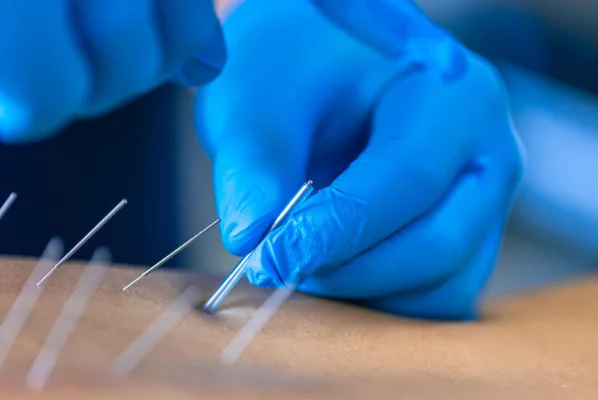
PTA Integration in Dry Needling

 Maxine K. signed
just now
Adam B. signed
just now
Maxine K. signed
just now
Adam B. signed
just now
Petition to Allow Physical Therapist Assistants (PTAs) Access to Dry Needling Certification Training
To: Arizona State Board of Physical Therapy
We, the undersigned, respectfully petition for Physical Therapist Assistants (PTAs) to be granted the opportunity to enroll in dry needling certification courses.
Rationale for Expanding PTA Access to Dry Needling Training1. Improved Patient Access to Care
- Many regions face provider shortages and high patient demand for advanced pain management and neuromuscular interventions.
- Allowing PTAs to gain formal dry needling training under PT supervision would expand access, reduce wait times, and improve continuity of care.
2. PTA Education Provides a Strong Foundation
- PTAs are already trained extensively in anatomy, physiology, kinesiology, therapeutic exercise, manual therapy, wound care, and safe use of modalities.
- With additional coursework in invasive techniques, sterile precautions, and clinical safety, PTAs can competently and safely perform dry needling.
3. Consistency with Other Professions
- Athletic Trainers (ATs), Chiropractors, and other licensed professionals are permitted to pursue dry needling certification.
- PTAs, who work directly under PT supervision and within a defined scope, should also be given structured pathways to this training.
4. Enhancing the PT/PTA Team Dynamic
One of the greatest strengths of physical therapy practice is the collaborative relationship between PTs and PTAs. PTs serve as the evaluators, diagnosticians, and planners of care, while PTAs deliver much of the direct patient treatment under PT supervision.
Currently, if a PT determines that dry needling is appropriate for a patient primarily being treated by a PTA, the PT must interrupt their schedule to step in, perform the dry needling, and then step back out. This results in inefficient workflows, disrupts continuity of care, and prevents PTs from focusing on higher-level clinical tasks.
Allowing PTAs to be trained and certified in dry needling would:
- Free up PTs for higher-level responsibilities, including evaluations, complex case management, advanced manual interventions, and program development.
- Prevent constant treatment interruptions, enabling PTAs to integrate dry needling seamlessly into the patient’s care plan under PT supervision.
- Increase efficiency and continuity of care, as patients receive consistent treatment from their primary provider while PTs remain available for oversight and plan-of-care adjustments.
- Support workforce sustainability, reducing burnout for PTs and improving patient access in high-volume clinics and underserved areas.
By empowering PTAs with this additional competency, the PT/PTA team becomes more effective, more collaborative, and more responsive to patient needs — while maintaining PT oversight and ensuring that complex decision-making remains within the PT’s scope.
5. Safety Through Regulation, Not Restriction
- Excluding PTAs from training does not enhance patient safety.
- A structured, accredited training and certification process would ensure PTAs are competent, supervised, and regulated in dry needling, aligning safety standards with patient needs.
- Pneumothorax after needling (dry needling or acupuncture in thoracic areas) is documented but rare; most publications are single-case reports and small case series.
- There are no robust, peer-reviewed comparative studies that report pneumothorax (or other major complications) stratified by provider type (PT vs. PTA).
- Therefore, no valid numerical evidence shows increased risk attributable to PTAs versus PTs based on current literature.
- Anatomic site (thorax/intercostal spaces = higher risk)
- Needle depth and angle (deep perpendicular insertions over lung fields increase risk)
- Patient factors (thin habitus, COPD/emphysema, prior thoracic surgery/scar)
- Training, competency, and experience (knowledge of surface anatomy, palpation, needle control)
- Systems & safeguards (supervision, competency assessment, incident reporting, emergency plans)
States currently permitting PTAs to obtain dry needling certification include Illinois and Texas. In these states, PTs may delegate appropriate interventions to PTAs under their supervision.
Illinois State Board of Physical Therapy: Reference 225ILCS 90/1.5 Dry Needling (b)
- A physical therapist or physical therapist assistant licensed under this Act may only perform dry needling after completion of requirements, as determined by the Department by rule, that meet or exceed the following:
1. 50 hours of instructional courses that
include, but are not limited to, studies in the musculoskeletal and
neuromuscular system, the anatomical basis of pain mechanisms, chronic and
referred pain, myofascial trigger point theory, and universal precautions;
2. Completion of at least 30 hours of
didactic course work specific to dry needling;
3. Successful completion of at least 54
practicum hours in dry needling course work;
4. Completion of at least 200 supervised
patient treatment sessions; and
5. Successful completion of a competency
examination. Dry needling shall only be performed by a licensed physical
therapist or licensed physical therapist assistant.
Texas Board of Physical Therapy Examiners: PT Practice Act/Rules
- Does not prohibit a PTA from performing dry needling.
- Supervising PT holds primary responsibility for all physical therapy care rendered under their supervision and is responsible for assuring PTA has the competencies required.
We respectfully request that:
- The Arizona State Board of Physical Therapy review and update scope-of-practice language to allow PTAs to pursue dry needling training and practice under PT supervision.
- Dry Needling Course Providers expand eligibility to include PTAs with active licensure, provided they complete the same coursework and clinical competency checks as PTs.
PTAs are skilled, licensed professionals who already contribute greatly to patient care. With appropriate training, PTAs could safely and effectively deliver dry needling as part of the PT-directed plan of care.
Expanding access to dry needling training for PTAs will:
- Improve patient access
- Strengthen the PT/PTA team dynamic
- Ensure safe, standardized education
- Advance the profession of physical therapy
We urge decision-makers to consider this proposal in the best interests of patients, providers, and the profession.
 Share on Facebook
Comment
See More 0