Status: Closed — this petition is no longer accepting signatures.

Petition to Have Oxford Dictionary Have Correct Definition of Scientific Theory Included

Final supporters
More like this
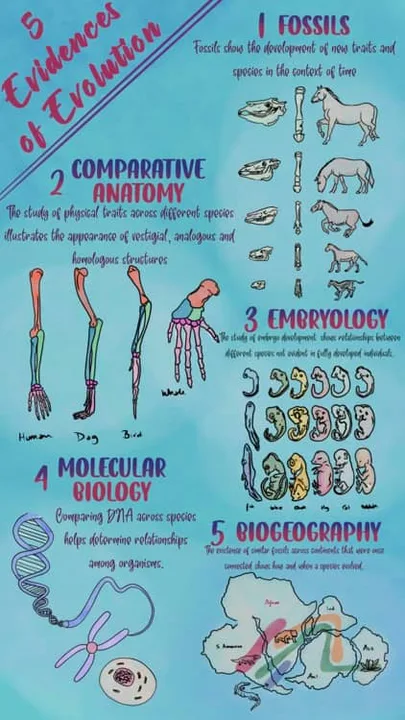
EVOLUTION IS A FACT...not a theory!

INCA (And Other Connections Academy Schools) Should Teach All Major Theories…
4 Comments
The OED is often cited as the basic reference for the vocabulary of the English Language. As such, its definitions need to reflect essential distinctions such as the distinction between a general theory and a scientific theory, particularly when a scientific theory is presented as an example for what is atcually the more general definition, inconsistent with the example.
about time
Scientific theory - Not just thoughts! Scientific theories! And please don't confuse scientific theories with the common usage of the word "theory". Scientific theories are the most reliable, rigorous, and comprehensive form of scientific knowledge. This is significantly different from the common usage of the word "theory", which implies that something is a conjecture, hypothesis, or guess (i.e., unsubstantiated and speculative). http://en.wikipedia.org/wiki/Scientific_theory In general, a scientific law is the description of an observed phenomenon. It doesn't explain why the phenomenon exists or what causes it. The explanation of the phenomenon is called a scientific theory. It is a misconception that theories turn into laws with enough research! In science, laws are only a starting place. From there, scientists can then ask the questions, 'Why and how?' In science, a "fact" typically refers to an observation, measurement, or other form of evidence that can be expected to occur the same way under similar circumstances. However, scientists also use the term "fact" to refer to a scientific explanation that has been tested and confirmed so many times that there is no longer a compelling reason to keep testing it or looking for additional examples. In that respect, the past and continuing occurrence of evolution is a scientific fact. Because the evidence supporting it is so strong, scientists no longer question whether biological evolution has occurred and is continuing to occur. Instead, they investigate the mechanisms of evolution, how rapidly evolution can take place, and related questions.
Share this petition
Share this petition to help it reach more people.
Your share link
Status: Closed — this petition is no longer accepting signatures.
Petition to Have Oxford Dictionary Have Correct Definition of Scientific Theory Included
Final supporters
4 Comments
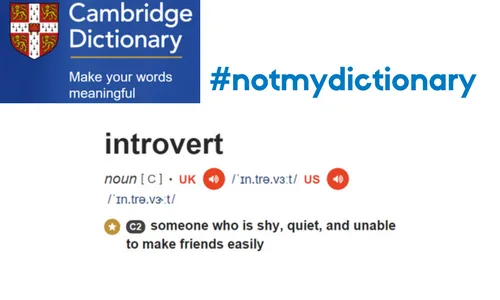
Please specify the difference between the colloquial use of theory (an idea) and the scientific use (an established mechanism of natural events supported by a large body of scientific evidence)
The OED is often cited as the basic reference for the vocabulary of the English Language. As such, its definitions need to reflect essential distinctions such as the distinction between a general theory and a scientific theory, particularly when a scientific theory is presented as an example for what is atcually the more general definition, inconsistent with the example.
about time
Scientific theory - Not just thoughts! Scientific theories! And please don't confuse scientific theories with the common usage of the word "theory". Scientific theories are the most reliable, rigorous, and comprehensive form of scientific knowledge. This is significantly different from the common usage of the word "theory", which implies that something is a conjecture, hypothesis, or guess (i.e., unsubstantiated and speculative). http://en.wikipedia.org/wiki/Scientific_theory In general, a scientific law is the description of an observed phenomenon. It doesn't explain why the phenomenon exists or what causes it. The explanation of the phenomenon is called a scientific theory. It is a misconception that theories turn into laws with enough research! In science, laws are only a starting place. From there, scientists can then ask the questions, 'Why and how?' In science, a "fact" typically refers to an observation, measurement, or other form of evidence that can be expected to occur the same way under similar circumstances. However, scientists also use the term "fact" to refer to a scientific explanation that has been tested and confirmed so many times that there is no longer a compelling reason to keep testing it or looking for additional examples. In that respect, the past and continuing occurrence of evolution is a scientific fact. Because the evidence supporting it is so strong, scientists no longer question whether biological evolution has occurred and is continuing to occur. Instead, they investigate the mechanisms of evolution, how rapidly evolution can take place, and related questions.
Share this petition
Share this petition to help it reach more people.
Your share link
Petitions like this
Other petitions you might want to support




Scan to share
Anyone who scans this can sign the petition.
Please specify the difference between the colloquial use of theory (an idea) and the scientific use (an established mechanism of natural events supported by a large body of scientific evidence)