The OECD has formally acknowledged our call for a more holistic educational agenda. This shift away from a purely ranking-based model is a massive victory for students everywhere.
June 30, 2015

Final supporters


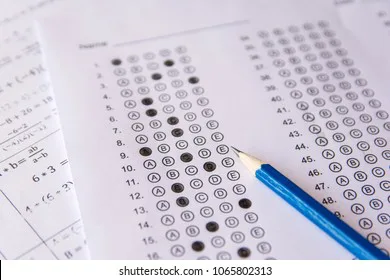
The Programme for International Student Assessment (PISA, OECD) has become a global ‘benchmark of standards’ in education.It has been instrumental in the development of an assessment system of fundamental cognitive and reflexive processes to enable young people to face the global economic challenges of our time. However, the narrow focus on cognitive processes, assessment and ranking, and the consequent pressure on countries to improve their ranking and move up the league tables, is driving educational authorities and schools to invest more on what is measured by PISA, rather than an education which balances cognitive with social, emotional, and cultural education. Although the oecd has just published a report on social and emotional skills in education, the focus is still on a performance-related, economy-based model of education.
A group of educationalists and researchers from Denmark, Italy, Malta, Mexico, New Zealand, Spain, Switzerland and the United Kingdom, are expressing their concern about the PISA phenomenon by drawing up a declaration on children’s growth and wellbeing. The declaration, originally drafted in Santander, Spain, is thus known as the Santander Declaration. It seeks to broaden the educational agenda being promoted by PISA, by underlining the need to address the physical, cognitive, social, emotional, spiritual and artistic development of the learner. It argues for a humanistic, inclusive, culturally responsive, democratic, equitable, and holistic education across the world, and underlines the need for school communities to have a meaningful say in shaping and adapting the curriculum according to their culture and needs.
--------------------------------------------------------------------------------------
Santander Declaration 2014
We believe that every child and young person has the right to a balanced, meaningful, holistic, creative and arts-rich education. In order to advance the above, we commit ourselves to promote the following:
1. That schools and early years settings provide a learning environment where academic, social and emotional education competences are in creative balance;
2. That schools and early years settings operate as learning and caring communities in which all students, teachers and parents have the opportunity to experience sustainability and wellbeing;
3. That educational and learning contexts consciously seek to strengthen students’ connectedness with themselves, others and the environment;
4. That social and emotional education be embedded in all initial teacher education and that practicing teachers and educators can access on-going professional education and support to continuously develop their relational and emotional competences;
5. That schools and early years settings have the autonomy and agency to determine their educational and social agenda according to their own respective cultures and contexts.
----------------------------------------------------------------------------------------
We are organising this petition which will be sent to UNICEF and other similar organisations.
Davide Antognazza (University of Applied Science and Arts of Southern Switzerland), Neil Boland (Auckland University of Technology, New Zealand), Valeria Cavioni (University of Pavia, Italy), Carmel Cefai (University of Malta, Malta), Christopher Clouder (Alliance for Childhood), Belinda Heys (Future Calling Ltd, UK), Claudia Madrazo (Transformation, Arte y Educacion TAE Foundation, Mexico),Claes Solborgh (UCC, Copenhagen, Denmark).
----
If you are in agreement with this declaration we are urging you to sign the petition (top right).
For further information see http://www.um.edu.mt/__data/assets/pdf_file/0019/2...
Updates
April 19, 2015
The momentum behind this declaration is undeniable. It is clear that people everywhere are ready to demand a more human approach to education.
Reached 100 supporters
April 19, 2015
29 Comments
Remove the limiting influences of testing from education to allow teachers to work more intuitively and with greater freedom. This will benefit the children.
Education should foster the development of the physical, social, emotional, artistic, spiritual and intellectual capacities of the human being, not be narrowed into testing, ranking and measuring students for economic output.
So in line with NIVOZ way of thinking: education should provide chances rather than being a selection mechanism!
By narrowing our focus for our children we can fall into the trap of narrowing our expectations - encompassing the broadness of what humanity has to offer can only result in endless opportunities for brillance in all its diversity.
I have given my life of 55 successful teaching years to creative and inspiring education and wish to see more children developing from this broader educational agenda.
It is time to act.
Freedom for delopment of individuals!
Share Petition
Don't stop at signing, share the petition link with friends to multiply our impact
Copy link or share directly
The OECD has formally acknowledged our call for a more holistic educational agenda. This shift away from a purely ranking-based model is a massive victory for students everywhere.
June 30, 2015
Final supporters
The Programme for International Student Assessment (PISA, OECD) has become a global ‘benchmark of standards’ in education.It has been instrumental in the development of an assessment system of fundamental cognitive and reflexive processes to enable young people to face the global economic challenges of our time. However, the narrow focus on cognitive processes, assessment and ranking, and the consequent pressure on countries to improve their ranking and move up the league tables, is driving educational authorities and schools to invest more on what is measured by PISA, rather than an education which balances cognitive with social, emotional, and cultural education. Although the oecd has just published a report on social and emotional skills in education, the focus is still on a performance-related, economy-based model of education.
A group of educationalists and researchers from Denmark, Italy, Malta, Mexico, New Zealand, Spain, Switzerland and the United Kingdom, are expressing their concern about the PISA phenomenon by drawing up a declaration on children’s growth and wellbeing. The declaration, originally drafted in Santander, Spain, is thus known as the Santander Declaration. It seeks to broaden the educational agenda being promoted by PISA, by underlining the need to address the physical, cognitive, social, emotional, spiritual and artistic development of the learner. It argues for a humanistic, inclusive, culturally responsive, democratic, equitable, and holistic education across the world, and underlines the need for school communities to have a meaningful say in shaping and adapting the curriculum according to their culture and needs.
--------------------------------------------------------------------------------------
Santander Declaration 2014
We believe that every child and young person has the right to a balanced, meaningful, holistic, creative and arts-rich education. In order to advance the above, we commit ourselves to promote the following:
1. That schools and early years settings provide a learning environment where academic, social and emotional education competences are in creative balance;
2. That schools and early years settings operate as learning and caring communities in which all students, teachers and parents have the opportunity to experience sustainability and wellbeing;
3. That educational and learning contexts consciously seek to strengthen students’ connectedness with themselves, others and the environment;
4. That social and emotional education be embedded in all initial teacher education and that practicing teachers and educators can access on-going professional education and support to continuously develop their relational and emotional competences;
5. That schools and early years settings have the autonomy and agency to determine their educational and social agenda according to their own respective cultures and contexts.
----------------------------------------------------------------------------------------
We are organising this petition which will be sent to UNICEF and other similar organisations.
Davide Antognazza (University of Applied Science and Arts of Southern Switzerland), Neil Boland (Auckland University of Technology, New Zealand), Valeria Cavioni (University of Pavia, Italy), Carmel Cefai (University of Malta, Malta), Christopher Clouder (Alliance for Childhood), Belinda Heys (Future Calling Ltd, UK), Claudia Madrazo (Transformation, Arte y Educacion TAE Foundation, Mexico),Claes Solborgh (UCC, Copenhagen, Denmark).
----
If you are in agreement with this declaration we are urging you to sign the petition (top right).
For further information see http://www.um.edu.mt/__data/assets/pdf_file/0019/2...
Updates
April 19, 2015
The momentum behind this declaration is undeniable. It is clear that people everywhere are ready to demand a more human approach to education.
Reached 100 supporters
April 19, 2015
29 Comments
Children deserve a holistic education which inspires and encourages them to express their creativity, joy and curiosity. There are untapped depths and brilliance in young humans - who knows what genius lies within each one, waiting for the opportunity and freedom to flower.
Remove the limiting influences of testing from education to allow teachers to work more intuitively and with greater freedom. This will benefit the children.
Education should foster the development of the physical, social, emotional, artistic, spiritual and intellectual capacities of the human being, not be narrowed into testing, ranking and measuring students for economic output.
So in line with NIVOZ way of thinking: education should provide chances rather than being a selection mechanism!
By narrowing our focus for our children we can fall into the trap of narrowing our expectations - encompassing the broadness of what humanity has to offer can only result in endless opportunities for brillance in all its diversity.
I have given my life of 55 successful teaching years to creative and inspiring education and wish to see more children developing from this broader educational agenda.
It is time to act.
Freedom for delopment of individuals!
Share Petition
Don't stop at signing, share the petition link with friends to multiply our impact
Petitions like this
Other petitions you might want to support




Scan to share
Anyone who scans this can sign the petition.
Children deserve a holistic education which inspires and encourages them to express their creativity, joy and curiosity. There are untapped depths and brilliance in young humans - who knows what genius lies within each one, waiting for the opportunity and freedom to flower.