The Ministry has backed down and the most damaging parts of the draft law are finally off the table. My head is spinning from the sheer weight of these past few months but we held our ground until the end. We need to stay vigilant because the future of our …
Translation from Ukrainian (http://www.ukma.kiev.ua/news/news_detailed.php?id=1762)
To:
Viktor Yanukovych, President of Ukraine
Volodymyr Lytvyn, Chairman of the Verkhovna Rada of Ukraine
Mykola Azarov, Prime Minister of Ukraine
Open letter
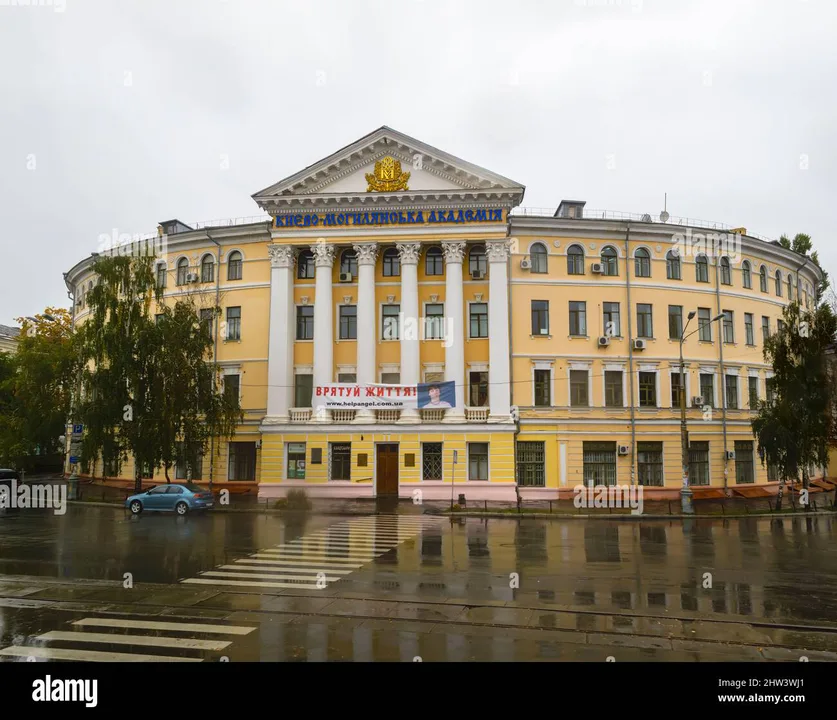
from Serhiy Kvit, President of the National University of “Kyiv-Mohyla Academy,”
about the policies of Dmytro Tabachnyk, Ukraine’s Minister of Education and Science,
for authoritarian and centralized governmental control of higher education in Ukraine
and the degradation of science and learning in the country more generally.
Honorable Mr. President,
Honorable Mr. Chairman of the Verkhovna Rada of Ukraine,
Honorable Mr. Prime Minister of Ukraine,
On behalf of the National University of “Kyiv-Mohyla Academy” I am addressing
you with the purpose of informing you about current developments in higher education
in Ukraine that, in our opinion, will lead to a self-imposed isolation of the country in the
sphere of education, as well as to the unacceptable degradation of the nation’s science,
education, and economy.
The Ministry of Education and Science of Ukraine is presently engaged in hurried
discussions of a Draft Law “On Higher Education” for Ukraine that threaten to inhibit the
normal development of institutions of higher education by not providing them with
sufficient autonomy to make it possible for them to attain a level of international
competitiveness. This Draft Law includes a number of specific threats, the most
important of which are the following:
1. Although there are references in the Draft Law to the subject of autonomy for the
institutions of higher learning, it is uncertain what they mean exactly. We believe
that responsibility for a university’s growth and development should fall on the
university itself, and that therefore such institutions should be entrusted with broad
academic, financial, and organizational freedoms for the task. The concept
of academic freedom, in addition to basic scientific and educational components, also
includes freedom for a university to define its own mission and objectives, and to
develop a culture of critical thinking, cooperative action, and empowerment for
students. Accordingly, institutions of higher education institutions should organize
their activities and be able solve problems independently, while the state and society
(that is, the public in general, employers of university graduates, non-government
organizations, etc.) should assess the abilities of a university’s graduates and the
quality of research that is produced there in the marketplace. De facto refusal of the
idea that universities should be charged with responsibility for the quality on the
labor market of the diplomas they grant, as is proposed by the Draft Law, conflicts
with fundamental principles of both European and world higher education practices.
2. The potential for a market-based approach to the funding of universities is being
obstructed in an attempt to maintain an unacceptable status quo in which
the universities have at their disposal only those funds that come from the state.
Such a situation prevents the normal development of universities and feeds
corruption. Instead of diversifying the sources of income for higher education
institutions, the current situation will continue the inefficiencies that are endemic
to exclusive reliance on state funding for higher education, and will do nothing
to reduce the impossibly heavy burden on the state budget that education needs
now present.
3. A new “iron curtain” of sorts is being erected by the Draft Law between Ukrainian
higher educational institutions and those of the European Higher Education Area
(EHEA) by virtue of how higher in Ukraine will fail to correspond with that in the rest
of the continent: (1) the formal launching of a three-cycle system of higher
education in Ukraine (Bachelor – Master - PhD) without creation of any genuine,
structured PhD programs; (2) complete disregard for the ECTS (European Credit
Transfer System) system; (3) disregard as well for agreed-upon standards that
define steps for academic mobility for professors and students alike; (4)
continuation of the structural obstacles that have prevented the launching
of interdisciplinary academic programs in Ukraine; (5) confirmation of complete
dependence of individual universities on higher education standards that would be
set unilaterally by the Ministry of Education and Science; (6) the lack
of opportunities for students to enroll in at least a bare minimum of elective courses
in their chosen programs of study; (7) the lack of a national strategy for the life-long
learning in Ukraine; and (8) the absence of any program for the Ukrainian academic
community to master the English language, the common language for academic
discourse around the world. This last item alone would make it completely
impossible for Ukrainian higher educational institutions to be taken seriously and
be competitive in the world arena.
4. New higher education standards are being formed without regard for the legitimate
interests of potential employers of university graduates and without a strong
understanding for the distribution of skills that will be needed in the national
and local economies in the future.
5. A much-needed plan to decrease the number of higher educational institutions
in Ukraine is being put forward with insufficient attention to the nature and quality
of existing institutions. Indeed there is a blanket quantitative regulator being
applied, one that is unknown in world practice – for example that comprehensive
universities should have a minimum of 10,000 students, and that academies should
have 3,000. Such a simplistic approach would exacerbate the problems of higher
education in Ukraine by encoding arbitrary standards, as well as underscoring for all
to see that Ukraine is not willing to institute positive reforms for genuine
improvement of higher education.
6. There is no understanding in the Draft Law that reforms in higher education are
directly connected with any university reforms per se, including creation
of possibilities for universities to chart their own development and enact innovative
activities. Likewise, there is nothing to stimulate new initiatives on the part
of universities, nor to increase their academic responsibilities, including that for
engagement in research, globally one of the most important activities at institutions
of higher learning and a key component for measuring their academic quality.
Therefore, special attention is needed in Ukraine to integrate science and education
through a real “bridging” between higher educational institutions and the various
research institutes of the Academy of Science of Ukraine. Moreover, unless the
current very high teaching loads of university faculty members are significantly
reduced, any hope for the development of a meaningful research component
in the country’s higher educational institutions would be just a no more then empty
words. The goal of the educational reforms should be the creation of high quality,
competitive universities that would have positive influence on the development
of the national economy within a context of a mission based on principles of social
responsibility. In this way, our universities could participate as equals with foreign
institutions in global discourse on educational and research matters.
7. The Draft Law is in conflict with the Program of Economic Reforms of the President
of Ukraine Viktor Yanukovych himself for the years 2010-2014 “Prosperous society,
competitive economics, effective state,” because it completely ignores the issues
of the Bologna process, academic quality, and our ability to be globally competitive.
The many experiences that North American, European, and Asian universities have had
with educational reforms point to a different approach: there should be close-up and
professional-based cooperation and understanding between various branches
of government, academic communities, and society as a whole. Without such
an approach successful reforms can never be implemented, nor can there ever be
commonly agreed-upon visions as to the goals of higher education.
Taking into consideration what I have mentioned above, I respectfully suggest that we
discard this ill-conceived Draft Law that Minister Tabachnyk has put forward.
Serhiy Kvit
President of the National University of “Kyiv-Mohyla Academy”
December 6, 2010
The exhaustion is setting in but we cannot afford to pause while these policies threaten our universities. Please take a moment to pull this into your own circles because we need to hit our current goal to be taken seriously.
6 Comments
O
Olena Mathis
15 years ago
Featured
Kvit is right. our students deserve better than these backward policies.
S
Serhiy Saunders
15 years ago
Featured
Total disaster. keep the ministry out of our curriculum.
O
Oksana Abbott
15 years ago
Featured
Tabachnyk is ruining everything for the next generation. We need real reform not this soviet style control.
A
Andriy Ryan
15 years ago
Featured
DEEP corruption reaching into the classrooms now. get rid of him!
D
Dmytro Verma
15 years ago
Featured
Finally someone said it! Stop killing our education system before it is too late.
I
Iryna Saunders
15 years ago
Featured
so tired of watching our best schools get held back by politics. let the universities be free.
Share this petition
Share this petition to help it reach more people.
Your share link
Couldn't copy automatically. Long-press to copy:
Share directly
The Ministry has backed down and the most damaging parts of the draft law are finally off the table. My head is spinning from the sheer weight of these past few months but we held our ground until the end. We need to stay vigilant because the future of our …
Translation from Ukrainian (http://www.ukma.kiev.ua/news/news_detailed.php?id=1762)
To:
Viktor Yanukovych, President of Ukraine
Volodymyr Lytvyn, Chairman of the Verkhovna Rada of Ukraine
Mykola Azarov, Prime Minister of Ukraine
Open letter
from Serhiy Kvit, President of the National University of “Kyiv-Mohyla Academy,”
about the policies of Dmytro Tabachnyk, Ukraine’s Minister of Education and Science,
for authoritarian and centralized governmental control of higher education in Ukraine
and the degradation of science and learning in the country more generally.
Honorable Mr. President,
Honorable Mr. Chairman of the Verkhovna Rada of Ukraine,
Honorable Mr. Prime Minister of Ukraine,
On behalf of the National University of “Kyiv-Mohyla Academy” I am addressing
you with the purpose of informing you about current developments in higher education
in Ukraine that, in our opinion, will lead to a self-imposed isolation of the country in the
sphere of education, as well as to the unacceptable degradation of the nation’s science,
education, and economy.
The Ministry of Education and Science of Ukraine is presently engaged in hurried
discussions of a Draft Law “On Higher Education” for Ukraine that threaten to inhibit the
normal development of institutions of higher education by not providing them with
sufficient autonomy to make it possible for them to attain a level of international
competitiveness. This Draft Law includes a number of specific threats, the most
important of which are the following:
1. Although there are references in the Draft Law to the subject of autonomy for the
institutions of higher learning, it is uncertain what they mean exactly. We believe
that responsibility for a university’s growth and development should fall on the
university itself, and that therefore such institutions should be entrusted with broad
academic, financial, and organizational freedoms for the task. The concept
of academic freedom, in addition to basic scientific and educational components, also
includes freedom for a university to define its own mission and objectives, and to
develop a culture of critical thinking, cooperative action, and empowerment for
students. Accordingly, institutions of higher education institutions should organize
their activities and be able solve problems independently, while the state and society
(that is, the public in general, employers of university graduates, non-government
organizations, etc.) should assess the abilities of a university’s graduates and the
quality of research that is produced there in the marketplace. De facto refusal of the
idea that universities should be charged with responsibility for the quality on the
labor market of the diplomas they grant, as is proposed by the Draft Law, conflicts
with fundamental principles of both European and world higher education practices.
2. The potential for a market-based approach to the funding of universities is being
obstructed in an attempt to maintain an unacceptable status quo in which
the universities have at their disposal only those funds that come from the state.
Such a situation prevents the normal development of universities and feeds
corruption. Instead of diversifying the sources of income for higher education
institutions, the current situation will continue the inefficiencies that are endemic
to exclusive reliance on state funding for higher education, and will do nothing
to reduce the impossibly heavy burden on the state budget that education needs
now present.
3. A new “iron curtain” of sorts is being erected by the Draft Law between Ukrainian
higher educational institutions and those of the European Higher Education Area
(EHEA) by virtue of how higher in Ukraine will fail to correspond with that in the rest
of the continent: (1) the formal launching of a three-cycle system of higher
education in Ukraine (Bachelor – Master - PhD) without creation of any genuine,
structured PhD programs; (2) complete disregard for the ECTS (European Credit
Transfer System) system; (3) disregard as well for agreed-upon standards that
define steps for academic mobility for professors and students alike; (4)
continuation of the structural obstacles that have prevented the launching
of interdisciplinary academic programs in Ukraine; (5) confirmation of complete
dependence of individual universities on higher education standards that would be
set unilaterally by the Ministry of Education and Science; (6) the lack
of opportunities for students to enroll in at least a bare minimum of elective courses
in their chosen programs of study; (7) the lack of a national strategy for the life-long
learning in Ukraine; and (8) the absence of any program for the Ukrainian academic
community to master the English language, the common language for academic
discourse around the world. This last item alone would make it completely
impossible for Ukrainian higher educational institutions to be taken seriously and
be competitive in the world arena.
4. New higher education standards are being formed without regard for the legitimate
interests of potential employers of university graduates and without a strong
understanding for the distribution of skills that will be needed in the national
and local economies in the future.
5. A much-needed plan to decrease the number of higher educational institutions
in Ukraine is being put forward with insufficient attention to the nature and quality
of existing institutions. Indeed there is a blanket quantitative regulator being
applied, one that is unknown in world practice – for example that comprehensive
universities should have a minimum of 10,000 students, and that academies should
have 3,000. Such a simplistic approach would exacerbate the problems of higher
education in Ukraine by encoding arbitrary standards, as well as underscoring for all
to see that Ukraine is not willing to institute positive reforms for genuine
improvement of higher education.
6. There is no understanding in the Draft Law that reforms in higher education are
directly connected with any university reforms per se, including creation
of possibilities for universities to chart their own development and enact innovative
activities. Likewise, there is nothing to stimulate new initiatives on the part
of universities, nor to increase their academic responsibilities, including that for
engagement in research, globally one of the most important activities at institutions
of higher learning and a key component for measuring their academic quality.
Therefore, special attention is needed in Ukraine to integrate science and education
through a real “bridging” between higher educational institutions and the various
research institutes of the Academy of Science of Ukraine. Moreover, unless the
current very high teaching loads of university faculty members are significantly
reduced, any hope for the development of a meaningful research component
in the country’s higher educational institutions would be just a no more then empty
words. The goal of the educational reforms should be the creation of high quality,
competitive universities that would have positive influence on the development
of the national economy within a context of a mission based on principles of social
responsibility. In this way, our universities could participate as equals with foreign
institutions in global discourse on educational and research matters.
7. The Draft Law is in conflict with the Program of Economic Reforms of the President
of Ukraine Viktor Yanukovych himself for the years 2010-2014 “Prosperous society,
competitive economics, effective state,” because it completely ignores the issues
of the Bologna process, academic quality, and our ability to be globally competitive.
The many experiences that North American, European, and Asian universities have had
with educational reforms point to a different approach: there should be close-up and
professional-based cooperation and understanding between various branches
of government, academic communities, and society as a whole. Without such
an approach successful reforms can never be implemented, nor can there ever be
commonly agreed-upon visions as to the goals of higher education.
Taking into consideration what I have mentioned above, I respectfully suggest that we
discard this ill-conceived Draft Law that Minister Tabachnyk has put forward.
Serhiy Kvit
President of the National University of “Kyiv-Mohyla Academy”
December 6, 2010
The exhaustion is setting in but we cannot afford to pause while these policies threaten our universities. Please take a moment to pull this into your own circles because we need to hit our current goal to be taken seriously.
6 Comments
O
Olena Mathis
15 years ago
Featured
Kvit is right. our students deserve better than these backward policies.
S
Serhiy Saunders
15 years ago
Featured
Total disaster. keep the ministry out of our curriculum.
O
Oksana Abbott
15 years ago
Featured
Tabachnyk is ruining everything for the next generation. We need real reform not this soviet style control.
A
Andriy Ryan
15 years ago
Featured
DEEP corruption reaching into the classrooms now. get rid of him!
D
Dmytro Verma
15 years ago
Featured
Finally someone said it! Stop killing our education system before it is too late.
I
Iryna Saunders
15 years ago
Featured
so tired of watching our best schools get held back by politics. let the universities be free.








Kvit is right. our students deserve better than these backward policies.